How to Store Sheets Without a Linen Closet
Apartments, older houses, guest rooms — plenty of homes simply don't have a dedicated linen closet. That doesn't mean your sheets have to live in a duffel bag on the floor. Here's where they actually go instead.
A huge amount of linen closet advice assumes you have one. If you're renting an apartment, living in an older home, or just got unlucky with the floor plan, "linen closet" might not even be a room that exists for you — and that's a genuinely different problem to solve than "how do I organize the closet I already have."
The good news is that sheets don't actually need a dedicated closet. They need a defined spot and a system — and there are a few spots that work surprisingly well.
Option 1: Under the bed
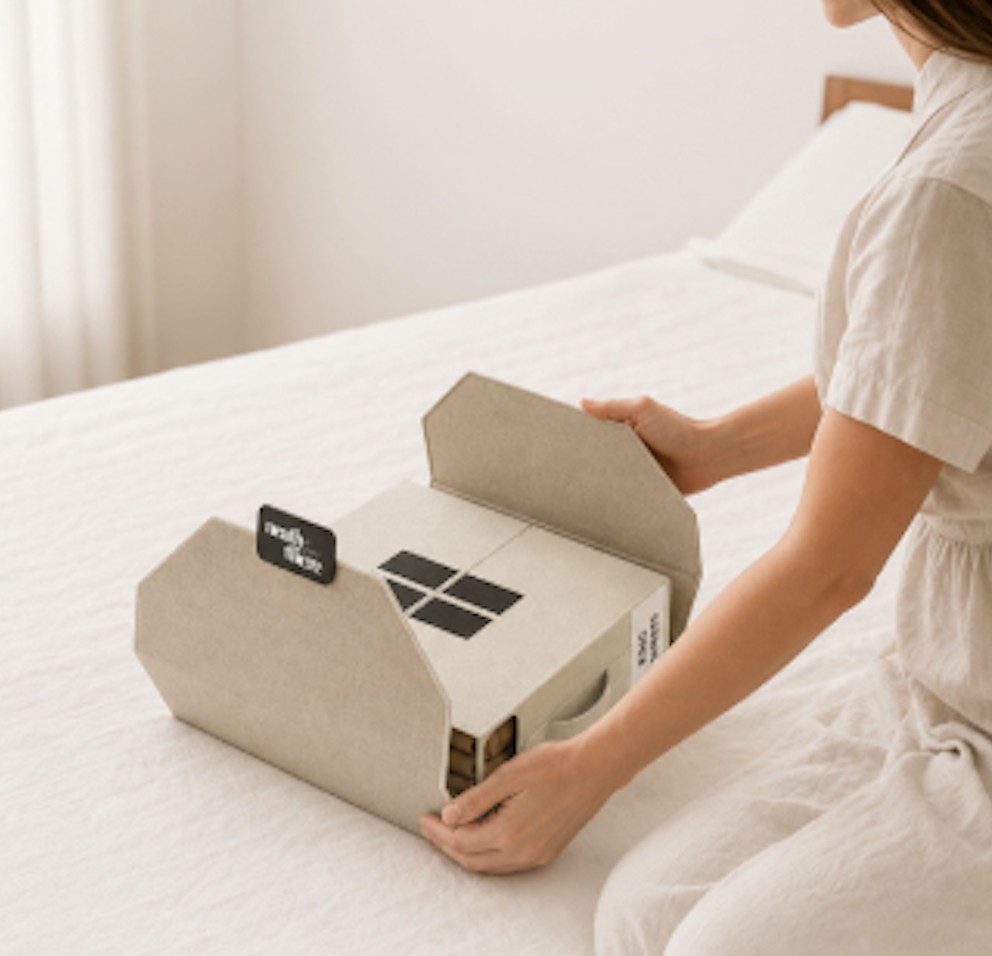
This is the most obvious fix, and it works better than people expect. The trick is not sliding loose folded sheets under there directly — dust, pets, and general chaos under a bed will undo your folding within a week. Use flat, structured containers instead, sized to slide easily in and out without you having to get on your hands and knees to dig around. A labeled organizer works especially well here, since you can read what's inside without pulling every container out first.
Option 2: A shared bedroom or hallway closet
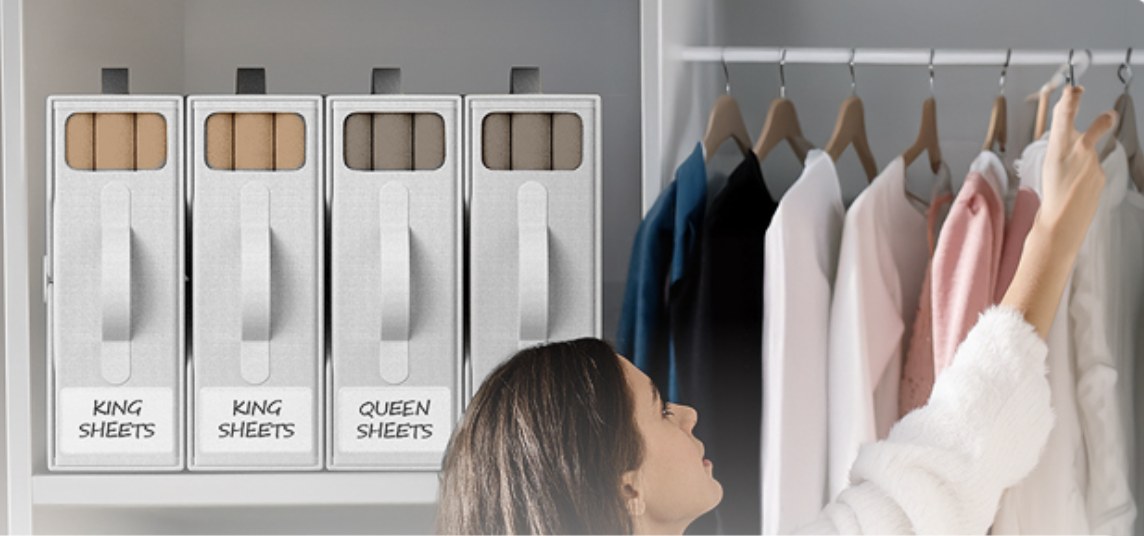
If you have any closet at all — even one that's already full of clothes or coats — sheets can share it, as long as they're contained. Loose folded sheets stuffed on a shelf above your clothes will slide, slump, and eventually mix with things that aren't sheets. Structured, uniform organizers solve this the same way they solve it in a dedicated linen closet: they hold their shape and stack cleanly, so a "linen shelf" can just be one shelf inside a closet you're already using for something else.
Option 3: Open shelving
Open shelving — a bookshelf, a wall-mounted shelf, a shelving unit in a hallway — is a completely valid linen closet substitute, with one catch: everything on it is visible, all the time. That makes presentation matter more than it would behind a closed door. This is where labeled, matching organizers earn their keep twice over — once for keeping the sets together, and again because a shelf of uniform, tidy cases just looks intentional instead of like a pile of household overflow.
No closet? No problem.
Labeled organizers work under the bed, on open shelving, or tucked into a shared closet — wherever you've actually got room.
Whichever spot you pick, containment does the heavy lifting
The common thread across all three options is that none of them work well with loose, unstructured fabric. Under a bed, in a shared closet, or out in the open, folded sheets left as-is will slump, gather dust, or get separated from the rest of their set. A structured case — the same one that would live in a dedicated linen closet — does the same job no matter where you put it, which is really the whole point: the storage system shouldn't depend on having a specific room. It just needs a defined, contained spot, wherever that ends up being in your home.
Quick answers
Where do you put sheets if you don't have a linen closet?
Under the bed in flat, structured containers, on open shelving, or inside a closet you're already using for something else — sheets just need a contained spot, not a dedicated room.
How do you store sheets in an apartment with no storage?
Under-bed storage is usually the most available option in a small apartment. Use labeled, structured organizers rather than loose stacks so you're not digging blind, and so dust and pets stay out of your folded sets.